Simba documentation
Retail & E-commerce — Online and Omnichannel Marketing Measurement
The Challenge
Retail and e-commerce brands face unique marketing measurement challenges:
- Online + offline sales — Customers discover products online and buy in-store (and vice versa)
- Promotional complexity — Frequent sales, discounts, and seasonal promotions make it hard to isolate media impact
- High-frequency decisions — Weekly or even daily budget adjustments across many channels
- Marketplace dynamics — Amazon, marketplace advertising, and retail media networks add complexity
- Seasonal peaks — Black Friday, holiday seasons, and back-to-school create massive spend fluctuations
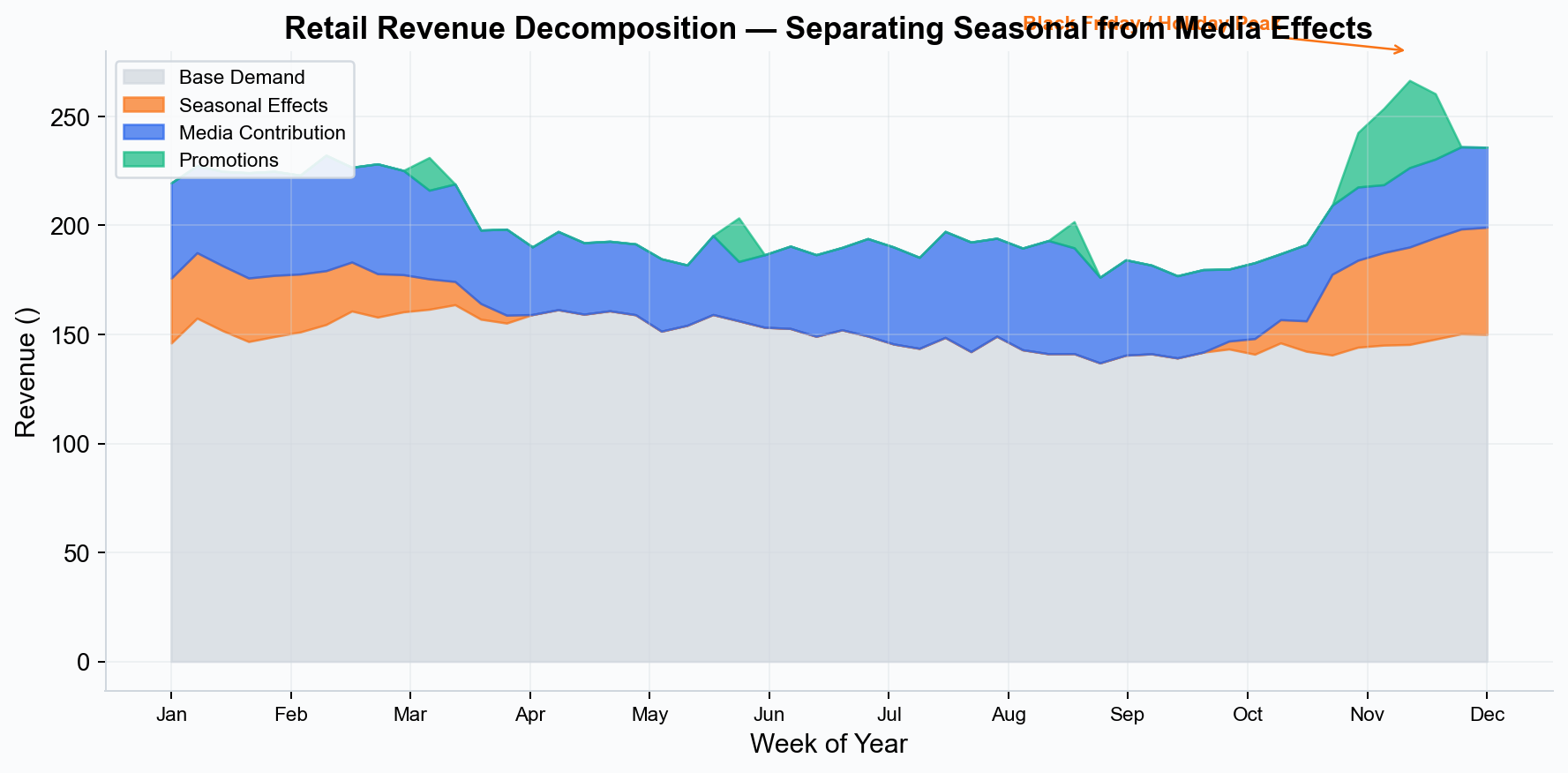 Simba decomposes retail revenue into base demand, seasonal effects, media contributions, and promotional impact — ensuring Black Friday and holiday spikes are not wrongly attributed to media spend.
How Simba Helps Retail Brands
Omnichannel Measurement
Simba models both online and brick-and-mortar outcomes in a single framework. Whether your target KPI is online revenue, in-store sales, or total blended revenue, Simba attributes marketing impact across all channels.
Promotional Impact Separation
Simba’s Bayesian approach can separate the impact of media from pricing and promotional effects. Include pricing data, discount depth, and promotional flags as control variables to ensure media attribution isn’t inflated by sale periods.
Seasonal Modeling
Retail is inherently seasonal. Simba automatically captures seasonal patterns so that you’re measuring the true incremental impact of media — not confusing holiday demand with advertising effectiveness.
High-Frequency Optimization
With weekly model updates and scenario planning, retail brands can make faster budget decisions during peak periods. Test whether shifting budget from TV to social during Black Friday week will improve returns — before committing the spend.
Recommended Data Inputs for Retail
| Variable | Description |
|---|---|
| Revenue (online) | E-commerce revenue by week |
| Revenue (offline) | In-store sales by week |
| Media spend by channel | TV, digital, social, search, OOH, etc. |
| Pricing/promotions | Average price, discount depth, promotional flags |
| Store count | Number of active stores (if changing) |
| Footfall | Store traffic data (if available) |
| Competitor activity | Competitor promotions or share of voice |
| Seasonal flags | Holiday weeks, sale events, seasonal markers |
See Data Requirements for format details and CSV specifications.
Example Retail Insights
Simba helps retail brands answer questions like:
- What is the true incremental revenue from TV advertising after removing seasonal effects?
- Is our Black Friday digital spend at peak efficiency, or are we past the saturation point?
- If we shift 20% of our search budget to social, what happens to total revenue?
- Which channels have the longest carryover effects for our brand?
Recommended Plans
- Enterprise — Full platform with multi-project support for different product categories or markets, portfolio modeling across brands.
- Managed — Expert-driven modeling by PhD statisticians, ideal for retail teams without in-house data science.
| → View Plans | Quick Start Guide |
| *See also: Supported Channels | Scenario Planning | Seasonality* |